What DFW Homeowners Should Expect During a Post-Storm Roof Inspection
DFW homeowners face a specific reality after spring and early fall storms. Hail hits often. Wind gusts twist shingles, lift ridge caps, and push water under flashings. A post-storm roof inspection is not a quick look from the driveway. It is a structured assessment, documented for insurers, and calibrated to North Texas roofs and weather. The process should protect the home first, capture evidence second, and set a clean path to repair or replacement under a valid claim. That is what a good inspection does across Burleson, Fort Worth, Dallas, Arlington, Plano, Frisco, and McKinney.
DFW sits in one of the most active hail belts in the United States. The metroplex averages 8 to 12 hail events each year with stones 1 inch or larger. Tarrant, Dallas, Collin, and Kaufman Counties see frequent claims. After the 2024 and 2025 storm cycles, properties along I-35W, US 287, and SH 174 in Burleson absorbed several severe hail cells that produced an unusually high number of roof claims. Homeowners in zip codes 76028, 76097, 76102, 75201, 76011, 75024, 75033, 75070, 75126, 75150, and 75032 know the pattern. A tight inspection standard is no longer optional. It is the only way to avoid missed damage and denied coverage.
What a true post-storm inspection covers
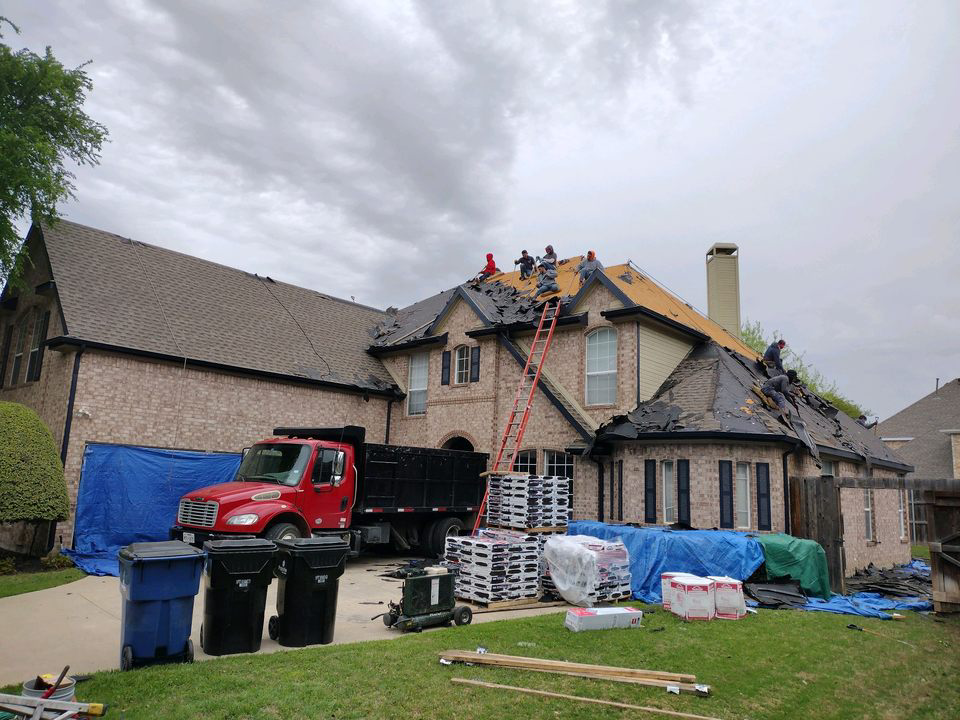
The inspection should begin from the ground with a safety check. The inspector notes tree strikes, broken glass, loose gutters, and displaced ridge vents that could fall. The second step is a controlled roof access. Ladders get tied off. On two-story homes, the crew may use a lift when the slope is steep or the ground is soft. On each slope, the inspector maps the damage. Chalk circles go around each hail strike that shows fractured granules, exposed asphalt, or a cracked mat on asphalt shingles. On standing seam metal, the focus shifts to panel indentations, seam deformation, and paint system scarring. On low-slope sections, such as porch covers or modern additions with EPDM roofing, the inspection targets membrane punctures, seam splits, and puncture paths around skylights, drains, and HVAC curbs.
The attic matters. A quick attic pass finds fresh water trails, deck staining, and displaced insulation. If a storm arrived with wind-driven rain, attic inspection can separate an old leak from a new event. Infrared moisture scanning can help on low-slope roofs and flat additions by showing wet insulation under an intact membrane. On shingle systems, infrared can detect active moisture in insulated cavities after a large event, usually within 24 to 48 hours of the storm if the roof has not dried down. The inspector should take moisture meter readings at suspect drywall under valleys and chimneys.
Hail, wind, and water: what damage actually looks like
Hail damage on asphalt shingles appears as a round impact where granules are knocked away. The asphalt base looks dark. The mat may be cracked. On a warm day the shingle can feel soft at that point. Good documentation distinguishes cosmetic loss from functional damage that affects service life. Wind damage often shows as creased shingles along the bottom edge where tabs lifted and then folded back. Fast winds can remove shingles near rakes and ridges. On hip and ridge caps the same crease line shows, but it tracks along the cap line. Water damage hides in the details. Counterflashing at chimneys, apron flashing at headwalls, and step flashing at sidewalls often fail during sideways rain. Sealant-only terminations at satellite brackets, solar standoffs, and old attic vents are common leak points after gust fronts push a storm line across Burleson and south Fort Worth.
Metal roofs behave differently. Standing seam panels, especially 24-gauge Galvalume with Kynar 500 coating, resist hail better than shingles in most cases. Large dents can still occur. Dents do not always mean functional loss, but seam distortion and fastener movement can. R-panel systems can show widespread dimpling on south and west slopes after a cell runs along I-35W. Inspectors should check for fastener back-out and neoprene washer failure, which becomes a chronic leak pattern months after the storm.
Low-slope and flat roof areas on homes and townhomes need a commercial-style check. EPDM roofing, TPO, and modified bitumen each fail in specific ways. EPDM roofing often shows hail punctures where sharp stones strike tight over the deck. Older EPDM seams taped with pressure-sensitive tape can split after thermal cycling adds to wind stress. TPO, like Carlisle Sure-Weld or Firestone UltraPly, can show surface bruising and punctures around walk pads and at T-joints. Modified bitumen often shows granule loss and cap sheet fractures at ridges and blisters. Skylight perimeters and pipe boots are frequent leak zones across low-slope home additions.
Documentation that insurance adjusters accept
A credible post-storm inspection produces more than photos. It produces a damage map, slope by slope, with counts per elevation. Each photo includes a size reference coin or tape, the date, and the compass orientation. The report states the storm date, the reported wind speed or hail size if available from reliable weather data, and the material type on the home. It flags all soft metals that show impact marks, including ridge vents, gutters, and box vents, which help verify hail size. For low-slope roofs, the report includes membrane type, thickness if known, and seam construction, such as heat-welded seam for TPO and PVC or pressure-sensitive seam tape for EPDM roofing. It includes pictures of punctures and any saturated areas noted by infrared or core checks on larger flat sections.
A short scope of work follows. It identifies replacement versus repair areas and separates code-required items. If an ice and water barrier is required in valleys under current local codes, the report notes it. If drip edge is missing and now required, the report adds it. If the roof deck shows rot at the eave, the report calls out deck replacement by sheet count. For low-slope sections, the scope states whether to repair the membrane or replace the section, and whether a cover board is needed before a new single-ply goes down.
HB3 compliance and why contractor choice affects claims
Texas Department of Insurance HB3 rules shape storm restoration in North Texas. Homeowners should expect written contracts, clear scope language, and no waiver tactics on deductibles. Insurers watch for storm-chaser behavior after big hail runs across places like Alsbury Boulevard and the Burleson Commons retail corridor. Inspections and estimates that match Xactimate formatting help move claims forward. Adjuster meeting representation speeds alignment on scope. A contractor with manufacturer credentials, such as GAF or CertainTeed for steep-slope and Carlisle, Firestone, Johns Manville, Versico, Sika Sarnafil, or Mule-Hide for low-slope, signals installation discipline that insurers respect.
HB3 also expects a clean paper trail. Homeowners should receive a copy of the inspection report, the estimate, warranty terms, and the signed contract. If supplements are required for items discovered during tear off, such as additional deck replacement or code upgrades, the contractor should file them with supporting photos and code citations. That is the professional path across DFW.
Timelines that reflect real DFW claim cycles
After a significant storm, claims across Tarrant and Dallas Counties build fast. Adjuster schedules stretch. A practical timeline looks like this. Inspection within 72 hours if the roof is safe to access, with same-day emergency tarping if active leaks exist. Claim filing within a few days of inspection. Adjuster assignment within 1 to 2 weeks during peak season, sometimes sooner. Adjuster meeting on site to align scope. Initial payment issued after approval. Build scheduling then depends on material availability, which can tighten during historic event years like 2024 to 2025. A typical roof replacement can be completed in 1 to 3 days for average single-family homes. Low-slope section repairs often happen same day. Full low-slope replacement can take 2 to 4 days depending on deck repairs and weather holds.
Costs and how inspection work is priced in DFW
Most residential post-storm inspections across Burleson, Fort Worth, Dallas, and Arlington are offered at no charge when a contractor expects to perform the repair or replacement if warranted. Specialty services may carry a nominal fee. Drone imagery and high-resolution damage mapping sometimes carry a charge when used for complex roofs. Infrared scans on low-slope sections, common on multifamily homes and modern houses, can range from $300 to $800 per inspection pass depending on size. When the roof needs only minor repair outside an insurance claim, homeowners often see $350 to $1,200 repair tickets for shingle work, and $500 to $2,500 for small low-slope membrane repairs. Partial membrane section replacement on low-slope residential areas can range $4 to $12 per square foot depending on material selection and whether a cover board or insulation replacement is required. These numbers reflect typical 2026 DFW ranges and shift with material markets.
What DFW weather means for roof material choices after a storm
North Texas heat, UV, and wind favor specific systems. On steep-slope homes, Class 4 impact rated shingles reduce future hail damage loss and can qualify for insurance premium credits. Standing seam metal in 24-gauge Galvalume with a PVDF finish resists both hail and sun degradation and holds color longer than SMP finishes. On low-slope add-ons, single-ply systems such as TPO and EPDM roofing respond well if the details are done right. TPO reflects heat and helps with summer cooling loads. EPDM handles movement and remains flexible. Modified bitumen remains a reliable option for small decks and porch roofs.
Attachment and details matter more than brand names. On low-slope sections, a fully-adhered attachment reduces wind flutter and noise near edges, which helps on homes along open corridors such as US 287 and the Hidden Creek area. Heat-welded seams on TPO and PVC remove the weak point created by tapes and adhesives. On EPDM roofing, properly cleaned and primed seams with pressure-sensitive tapes or liquid-applied flashing compounds at corners prevent early failure. Cover boards such as gypsum or HD polyiso add puncture resistance on low-slope roofs, which helps in hail alley conditions.
Roof ventilation, drainage, and why the small things decide success
Attic ventilation is not an accessory in DFW. The summers are hot. Balanced intake at the eaves and exhaust at the ridge keeps deck temperatures lower and extends shingle life. During inspection, the assessor should count vents, calculate net free area, and flag missing intake when only ridge vents are present. Many wind-driven leaks connect to blocked gutters. Downspouts that discharge onto lower roofs cause splashback and shingle aging. In low-slope sections, drain sumps and scuppers need a clear pathway to move water. Homes that mix steep-slope and low-slope areas often trap water behind tall sidewalls. Inspectors should look for positive drainage, check scuppers and through-wall scuppers where present, and confirm that counterflashing and kickout flashing send water away from the wall-roof junction.
What to expect during the actual walk-through
The homeowner walk-through should take 20 to 45 minutes for most houses. The inspector explains what was found, shows photos, and points out safety or emergency items. If temporary dry-in is needed, such as tarping a ridge or sealing a lifted vent, that work happens right away. The inspector explains whether EPDM single-ply roofing the findings warrant a claim. Not every storm causes functional damage. A credible contractor says so if the roof is fine. When damage is real, the inspector provides a written report with counts by slope and a clear plan to meet code for the replacement or repair.
Shingles, metal, and low-slope on one property: mixed systems and trade-offs
Many DFW homes, especially in Burleson neighborhoods such as Hidden Creek and Mountain Valley Lake, mix steep-slope shingles with porch or patio flat sections. After a storm, insurers may approve full replacement on shingles and only repair on the low-slope segment if punctures are minimal. Homeowners should understand the future risk on patched low-slope areas. A patched TPO or EPDM section can perform when done correctly with heat-welded patches or fully primed seam treatments. But if the insulation is saturated, a patch is not a repair. Insulation that tests wet must be removed. The inspection should flag this and note whether infrared or core checks support the call.
Shareable North Texas roofing facts that influence inspection standards
A surprising and useful data point for property owners and facility managers across the metroplex is this: across documented inspections in North Texas, roughly 60 percent of TPO roofs older than 12 years show measurable seam degradation on south-facing slopes due to UV and heat concentration. Residential data is thinner than commercial, but the physics do not change. Sun exposure is harsher on south and west faces from March through September. That is one reason why inspectors pay close attention to ridges, rakes, and south slopes after a storm. Another shareable fact is that a single 2 inch hail event can reduce the remaining life of an older asphalt roof by half even if penetrative leaks do not show up for months. This is why post-storm inspection is a now task rather than a wait-and-see item in the DFW hail belt.
How a claim moves from inspection to completion
The claim path should be straightforward. Inspection and report. Claim filed with photos and the scope of work. Adjuster review and on-site meeting if needed. Scope alignment using Xactimate line items. Initial payment issued on an ACV basis. Work scheduled and completed. Supplement filed for any hidden conditions with photo proof. Final invoice submitted to release recoverable depreciation under RCV policies. Homeowners should expect the contractor to align material selections with code and insurer requirements. If the policy allows upgrades, a Class 4 shingle or a standing seam metal system may be a smart long-term choice in Burleson and Fort Worth corridors that take frequent hail.
Interior checks that reveal roof issues that started outside
Ceiling stains at exterior wall lines often point to step flashing leaks. Stains around skylights indicate perimeter seal failures or curb flashing issues. A clean inspection includes a fast interior scan in key rooms. Bathrooms with vent stacks through the roof crack early when sun-baked pipe boots split. Kitchens with vented range hoods can leak around the wall cap or roof cap under wind. Garages with low insulation show leaks quickly on drywall joints. Inspectors should photograph interior evidence and tie it to the exterior cause in the report.
Expectations for workmanship and warranties after the storm
Homeowners should see written workmanship warranties and clear manufacturer warranty terms. On shingles from brands like GAF, enhanced warranties often require certified installers and full accessory systems, including starter, ridge, and underlayment. On low-slope replacements, manufacturer-backed system warranties from Carlisle, Firestone, Johns Manville, Versico, Sika Sarnafil, or Mule-Hide require strict details. Heat-welded seams for TPO and PVC, correct fastener patterns for mechanically fastened systems where used, and proper cover board installation when specified, all matter. A 15 EPDM roofing to 30 year No Dollar Limit warranty is common on commercial-grade systems and is increasingly used on larger residential low-slope sections. Warranty math can be favorable across a mortgage cycle when the roof system is installed to spec.
Red flags during post-storm inspections
Beware of inspectors who claim damage on every roof after every storm. False positives create friction with insurers and leave homeowners without trust. Another red flag is a lack of photo evidence or timestamped documentation. Refusing to meet an adjuster on site is also a concern. For low-slope sections, any recommendation to coat over punctures or saturated insulation on a residence is suspect. Coatings have a place, but they do not repair wet insulation or a punctured membrane. On steep-slope, a recommendation to nail over existing layers does not meet current codes in many North Texas cities. Burleson and Fort Worth permits generally require full tear off so the deck can be verified and repaired as needed.
What DFW homeowners near major corridors should prepare for
Homes close to I-35W, US 287, and SH 174 experience wind tunneling during storm outflows. Ridge caps and rake edges take a beating. Gutter systems collect more debris from surrounding trees after a blowdown. During inspection, homeowners can expect extra attention to ridge vent fasteners, gable end shingles, and gutter hangers. Along the Trinity River wind paths through Fort Worth and areas near AT&T Stadium, crews often see repeated edge failures when older nails rust and lose hold. The inspection should call for ring-shank nails or screws where appropriate on gutters and trim during replacement work, and proper edge metal on low-slope transitions.
EPDM roofing on residential additions and townhomes
EPDM roofing appears on many small flat decks in townhome clusters and updated homes across DFW. The material resists UV well and stays flexible. Its weak links are unprimed seams, aged pipe boots, and punctures from foot traffic and hail. A good post-storm inspection on EPDM roofing checks seam adhesion by gentle probe, confirms secure terminations at edges, and inspects cover strip transitions at T-joints. It also checks for ponding water marks that point to drainage issues. Where hail has struck hard, inspectors should probe the membrane for small craters and use patch kits that match the system. When the deck is wet or the insulation tests saturated, the only correct recommendation is section replacement, not a surface wipe and patch.
Why storm inspections for multifamily and mixed-use properties mirror commercial standards
Townhome associations and mixed-use buildings in DFW often use commercial assemblies on large low-slope areas. That is why the inspection approach mirrors commercial standards. Infrared moisture surveys detect saturated insulation under TPO or EPDM. Core samples verify whether the wet areas are isolated or widespread. On buildings near Plano’s Preston Road or along the Dallas North Tollway, wind exposure is higher and parapet walls play a larger role in water intrusion. The inspection should call out coping caps, counterflashing, drains, and scuppers. Even for a single-family homeowner reading this, the point is simple. When a home has any flat sections, the inspection should take a commercial-grade posture for those areas. That is how leaks get solved the first time.
What DFW Homeowners Should Expect During a Post-Storm Roof Inspection: the short version
Expect safety first, then evidence gathering, then a clear plan. Expect slope-by-slope counts, attic checks, and interior verification. Expect brand-level clarity when discussing materials, from GAF shingles to Carlisle or Firestone membranes on flats. Expect code compliance, HB3-aligned paperwork, and a clean claim workflow. Expect an honest answer when a roof does not warrant a claim. That standard protects homeowners in Burleson, Fort Worth, Dallas, Arlington, Plano, Frisco, McKinney, Mesquite, Forney, Rockwall, and Terrell.
Frequently missed items that a strong inspection finds
Kickout flashing at wall terminations is often missing on older homes in 76028 and 76123. It is a small part, but it prevents wall rot and interior stains. Nail pops under shingles are easy to miss if the inspector rushes. On low-slope transitions, counterflashing that is cut too short lets water back up under the metal. Inspectors should verify metal gauge and attachment. On metal roofs, loose pipe boots and deformed closures along rake lines leak later if not corrected now. Skylight perimeters with old butyl seals often crack during the first hot week after a storm. A trained eye finds these ahead of time and works them into the repair scope.
What makes a post-storm report shareable with adjusters and property managers
Adjusters and property managers respond to organized data. A report that begins with a one-page summary, followed by mapped photos, code notes, and a clear scope, often moves directly to approval. Photos of soft metal hits paired with shingle bruises help connect cause and effect. For low-slope, membrane cut-back photos that verify thickness and reinforcement build confidence. If the home sits along a known hail path from a specific date, the report should include a weather reference. Across DFW, reports that tie damage to a known event and present a disciplined scope reduce back-and-forth and produce fair outcomes.
For Burleson homeowners near Old Town and along Wilshire Boulevard
Properties near Old Town Burleson and along Wilshire Boulevard face a different set of exposures. Hail comes with high traffic noise and dust that accelerates wear on exposed sealants. High UV on south-facing slopes along Hidden Creek Parkway adds heat stress. A thorough inspection balances these factors. It does not default to replacement. It differentiates real hail bruising from traffic scuffing. It calls out aging sealants at through-wall penetrations. It confirms gutter sizing along steep eaves that dump water onto lower roofs. This attention to detail helps homeowners decide whether to file a claim or schedule maintenance.
How homeowners can prepare for the inspection visit
Clear access points like gates and attic entries. Move vehicles from under roof edges. Write down the storm date and the time you noticed any leaks. Keep a short list of rooms with interior stains. These preparation steps support the inspection flow. The roof team still leads the process. The visit should not require homeowner labor. The outcome should be a clear yes or no on claim viability and a precise repair or replacement path.
Why local presence matters in the DFW hail belt
After large hail events, out-of-area operators flood into Tarrant and Dallas Counties. Many lack HB3 compliance awareness and do not carry the manufacturer credentials needed for enhanced warranties. Local presence reduces risk. Dispatch routes from Terrell along US 80 to I-30, then across I-635 to Burleson via I-20 and I-35W, support same-day response during active leaks. Crews familiar with neighborhoods from Wedgwood and TCU area in Fort Worth to Lake Highlands in Dallas read roof conditions better and work faster with local adjusters who know the ground truth from that week’s storms.
Storm inspection takeaways for owners of mixed-material homes
Homes that mix Class 4 shingles, standing seam on accents, and a low-slope porch or balcony need a three-lens inspection. Shingle slopes are counted for hail and checked for wind creases. Metal accents are checked for seam integrity and paint system damage. Low-slope areas are treated as a separate roof with its own material, attachment, drainage, and warranty path. A single report should tie all three together and present a coordinated scope. That is how claims get approved and how homes across Burleson, Arlington, Plano, and Frisco return to pre-loss condition or better.
Post-storm inspection essentials DFW homeowners should expect
- Documented slope-by-slope hail and wind findings, with dated photos and compass notes Attic and interior checks to tie exterior damage to active moisture paths Low-slope membrane assessment where applicable, including EPDM roofing seams and terminations Code and HB3-aligned scope with clear line items for insurer review Emergency dry-in on the same visit when active leaks exist
On the ground in DFW: roads, landmarks, and exposure paths
Storms that track along I-20 or sweep across Tom Landry Freeway often drop large hail on the south and east sides of the metroplex. Cells that roll north along I-35W and US 287 hit Burleson, Crowley, and Everman before pushing into downtown Fort Worth near 76102. Wind behavior changes around tall structures such as AT&T Stadium, AmericanAirlines Center, and the Texas Motor Speedway. Inspectors factor these wind corridors into ridge and edge checks. In Dallas, homes near the LBJ Freeway and the President George Bush Turnpike see frequent fast-moving storm lines that push water under flashings. The inspection should read those patterns and anticipate where damage concentrates on roofs that face those corridors.
How inspections handle gutters, skylights, and attachments
Gutters are part of the roof system. Hail dents in gutters and downspouts help validate storm size. Functionally, crushed downspouts and pulled hangers cause overflows and siding damage later. Skylights vary from curb-mounted units that can be re-flashed to fixed deck-mounted units that often need replacement after severe hail. Vents, solar mounts, and satellite brackets need base flashing that ties into the roof, not just sealant. A solid inspection separates cosmetic from functional loss and sets the correct scope that restores function and meets code.
For homeowners hearing about
Many DFW homeowners search for right after a storm. The phrase shows up in local searches from Burleson to Rockwall. A true visit means a documented, camera-rich inspection, attic checks, and a scope that an adjuster can read in minutes. It means a fair recommendation when a roof does not need replacement. It means fast dry-in during active leaks, and a practical plan built around DFW codes and insurer requirements.
The right report shows counts per slope, photos of soft metal hits, and a scope that references current code. If a home includes a low-slope section, the report calls out the membrane type, such as EPDM roofing, TPO, or modified bitumen, and states whether the section is repairable or needs replacement. That is what helps an insurer release funds without delay.
Homeowners who book after the first major hail line of the season tend to avoid long scheduling delays. Crews that stage materials early move faster once approvals land. In contrast, late-season requests often face material shortages, especially in specific shingle colors or PVDF-coated metal coil stock. A timely inspection locks in options.
Across DFW, has another benefit. It surfaces aging conditions that storms expose but did not cause, such as brittle pipe boots, loose counterflashing, or under-vented attics. These line items can be addressed during the same project, with or without claim funding, to reduce future leak risk as the next round of storms heads across the Trinity River corridor.
Local case patterns homeowners ask about
South-facing slopes in Burleson and Mansfield absorb the most UV. After hail, those same slopes often show faster granule loss and more broken mats. West-facing slopes catch late-day heat that softens asphalt during summer storms, making hail bruises worse. In Mesquite and Forney, storm patterns that form along US 80 have produced fast-moving hail bands in recent seasons. In McKinney and Frisco, storms along the Sam Rayburn Tollway place wind shear on ridge lines that creates clean crease marks. A seasoned inspector reads these patterns and aims the camera where the damage concentrates.
What happens if the roof passes inspection
If the inspection finds no functional storm damage, a short maintenance plan is still worth it. Replace cracked pipe boots. Reseal lifted flashings. Clean gutters and confirm downspout discharge. Check attic ventilation. On homes with low-slope sections, verify that drains and scuppers run clear and that ponding marks are minimal. A small maintenance ticket now can prevent interior stains during the next storm cycle. In DFW, preventive work pays off.
Simple maintenance actions that reduce storm leaks
- Replace aged pipe boots and add a secondary storm collar where needed Install kickout flashing at missing wall-roof terminations Re-secure loose gutters and upgrade hangers on long runs Clear debris at low-slope drains, scuppers, and through-wall scuppers Balance attic ventilation with correct intake and ridge exhaust
How credentials and availability support the post-storm process
For DFW homeowners ready to schedule , contractor selection affects results. A Texas commercial roofing contractor with full single-ply and steep-slope experience brings commercial-grade inspection discipline to homes with any flat sections. Manufacturer credentials across GAF for shingles and Carlisle, Firestone, Johns Manville, Versico, Sika Sarnafil, and Mule-Hide for membranes help secure stronger warranty backing when low-slope areas need replacement. HB3 compliance prevents claims friction. Xactimate-trained estimators reduce back-and-forth with adjusters. Local coverage across Burleson, Fort Worth, Dallas, Arlington, Plano, Frisco, McKinney, Mesquite, Forney, Rockwall, and Terrell supports fast site visits, including after-hours emergency dry-in.
SCR, Inc. General Contractors operates 24 hours a day, 7 days a week from its Terrell headquarters at 107 Tejas Dr, 75160, with dispatch routes that cover Burleson via I-20 and I-35W and the rest of the DFW metroplex. The team performs post-storm inspections, emergency leak response, and full-scope replacements when claims approve. Homeowners can expect a free inspection and a written report that insurers accept. For immediate after a hail or wind event, call (972) 839-6834 or visit the Burleson service page to book an inspection.
SCR, Inc.
General Contractors
Roofing • Restoration • Storm Repair